Discover our course
Tom MacAuley — Architect
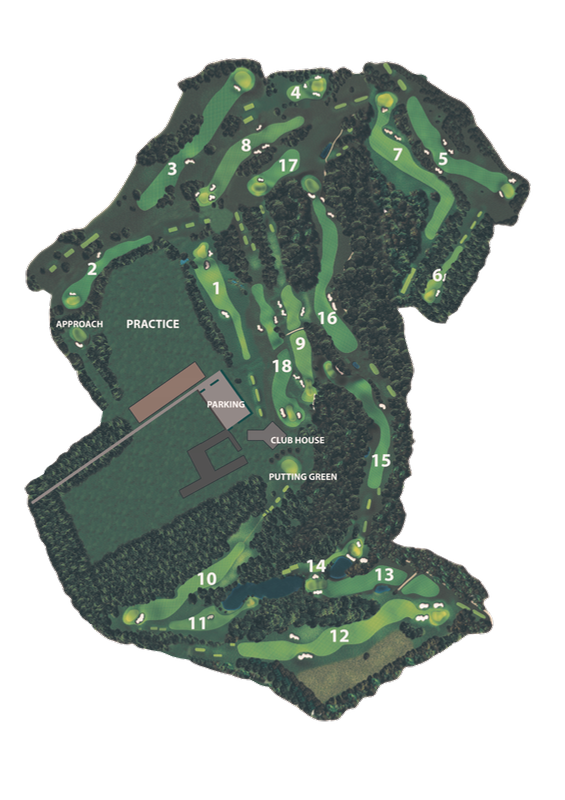
« Le Parc consists of two 9-hole loops, both starting and finishing near the clubhouse. Each loop combines two Par 3s, two Par 5s and five Par 4s. »
The Par 3s, each oriented differently, range from 150 to 206 m, with the shortest played over a pond. The Par 5s measure between 415 and 465 m, with contrasting orientations.
The Par 4s, the true test of golf, offer great diversity of shape and orientation, ranging from doglegs to more classic holes, from 292 to 391 m.
The focus was on diversity: fairway orientation, and the size and shape of the greens. On six Par 4s, fairway bunkers have been strategically placed, while water plays a key role, notably on hole 11, bordered by a pond on the left.
Course map
Hole by hole
Hole 1
Tips
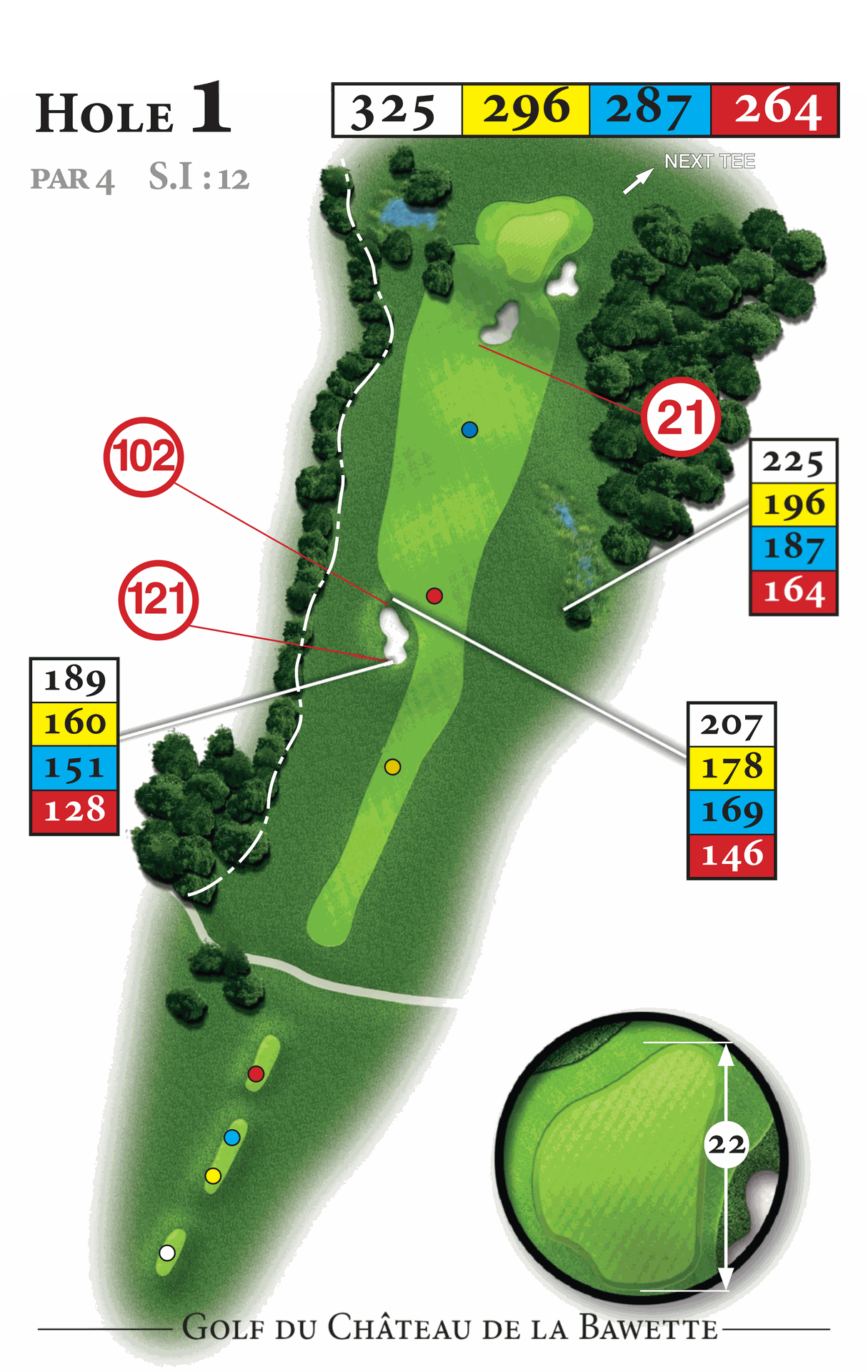
Tee shot: aim for the bunker on the left; the fairway slopes to the right.
Approach: bunker in front of the green, out of bounds to the left, behind and to the right.
Hole 2
Tips
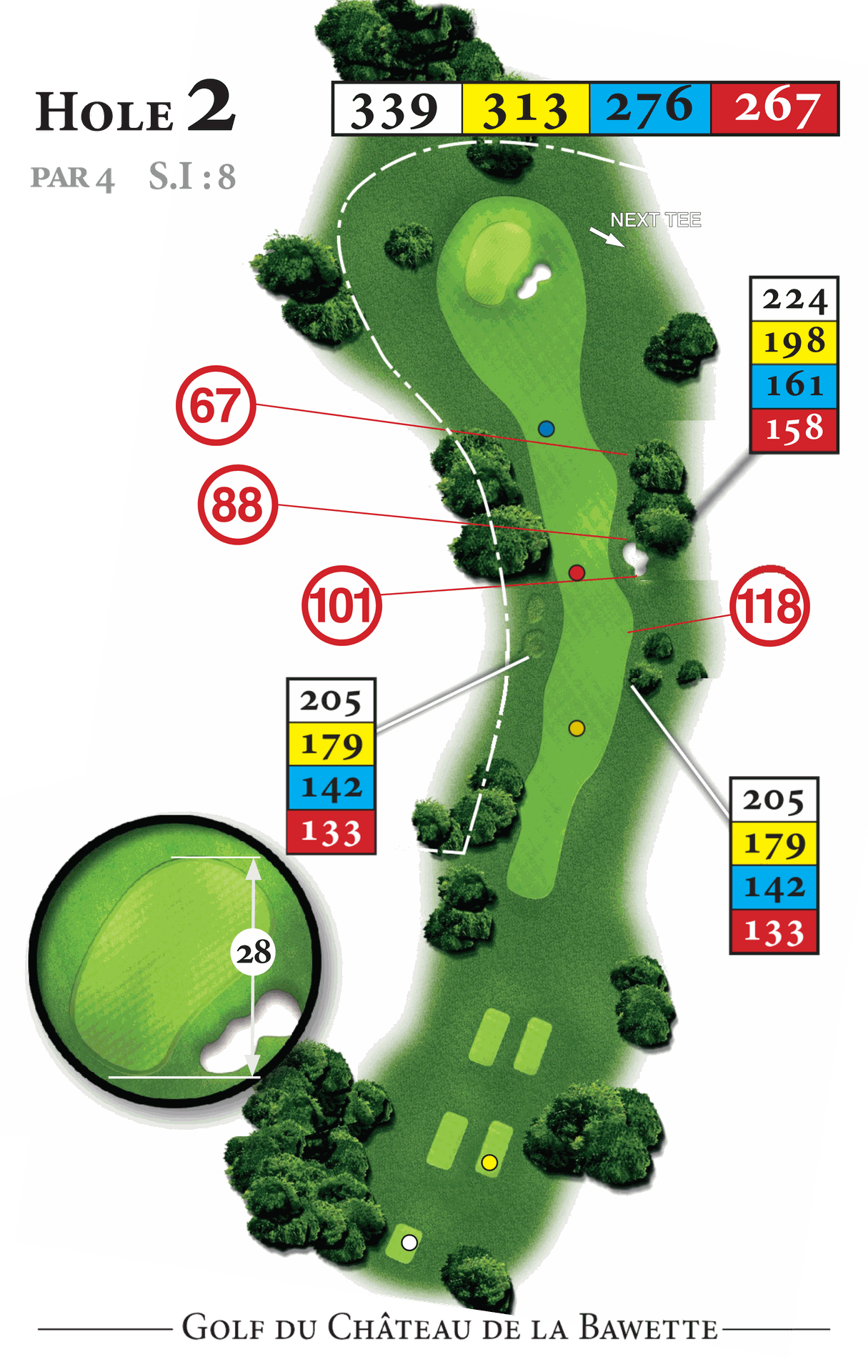
Tee shot: aim for the bunker on the right; the fairway slopes to the left.
Approach: bunker in front of the green; out of bounds to the left, behind and to the right.
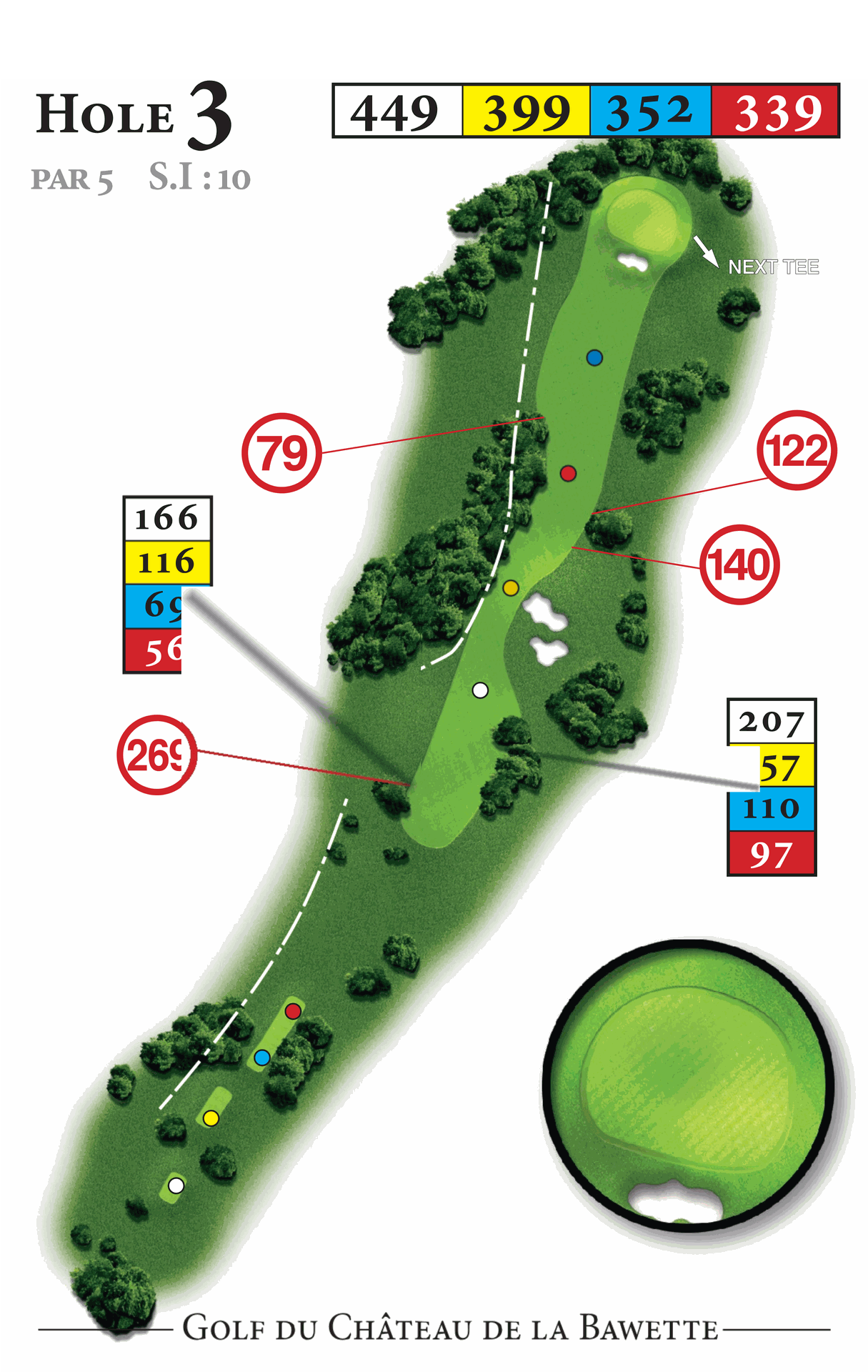
Hole 3
Tips
Tee shot: aim for the bunkers; out of bounds on the left; fairway slightly sloping to the right.
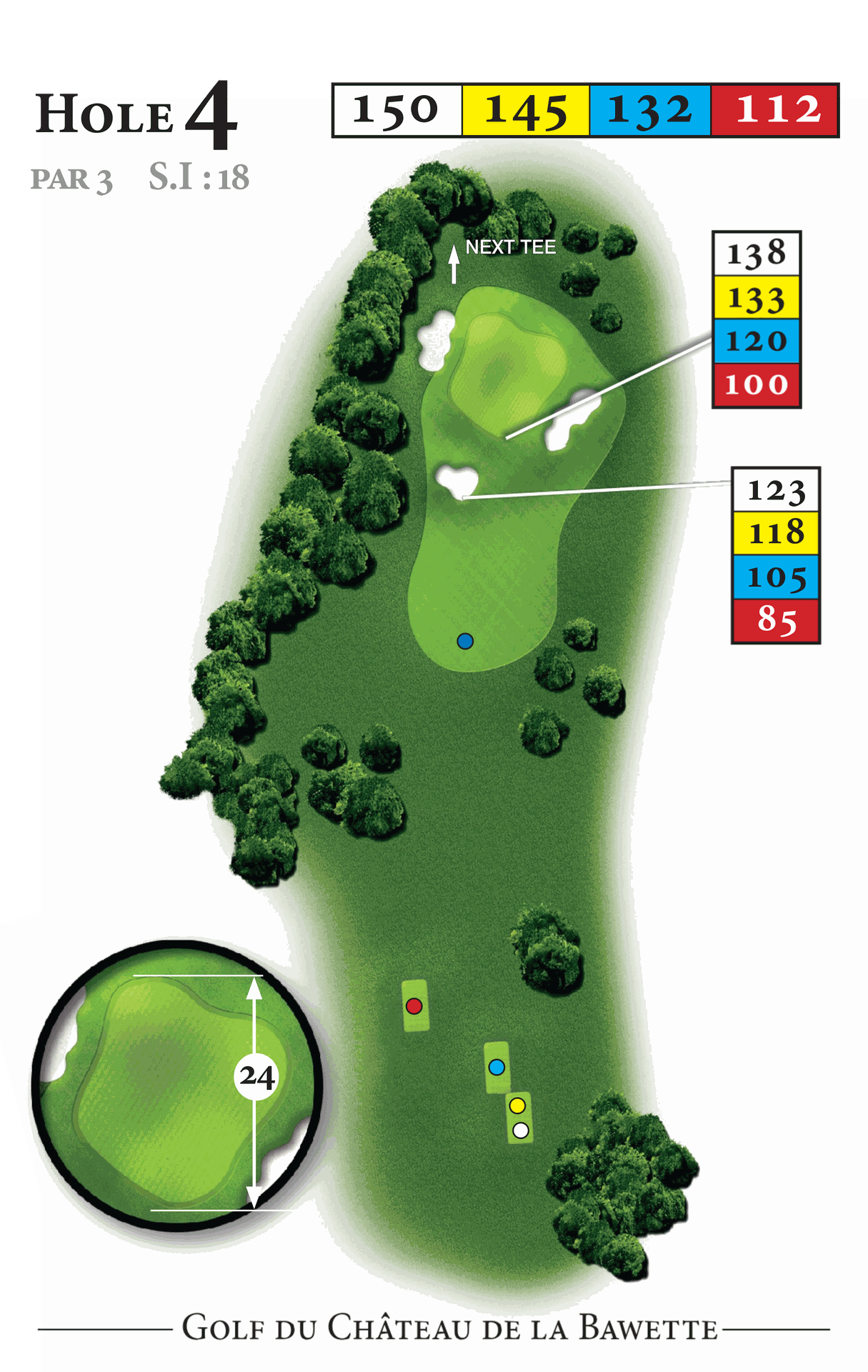
Hole 4
Tips
Approach: 3 bunkers, including one barely visible at ±15 m to the left in front of the green.
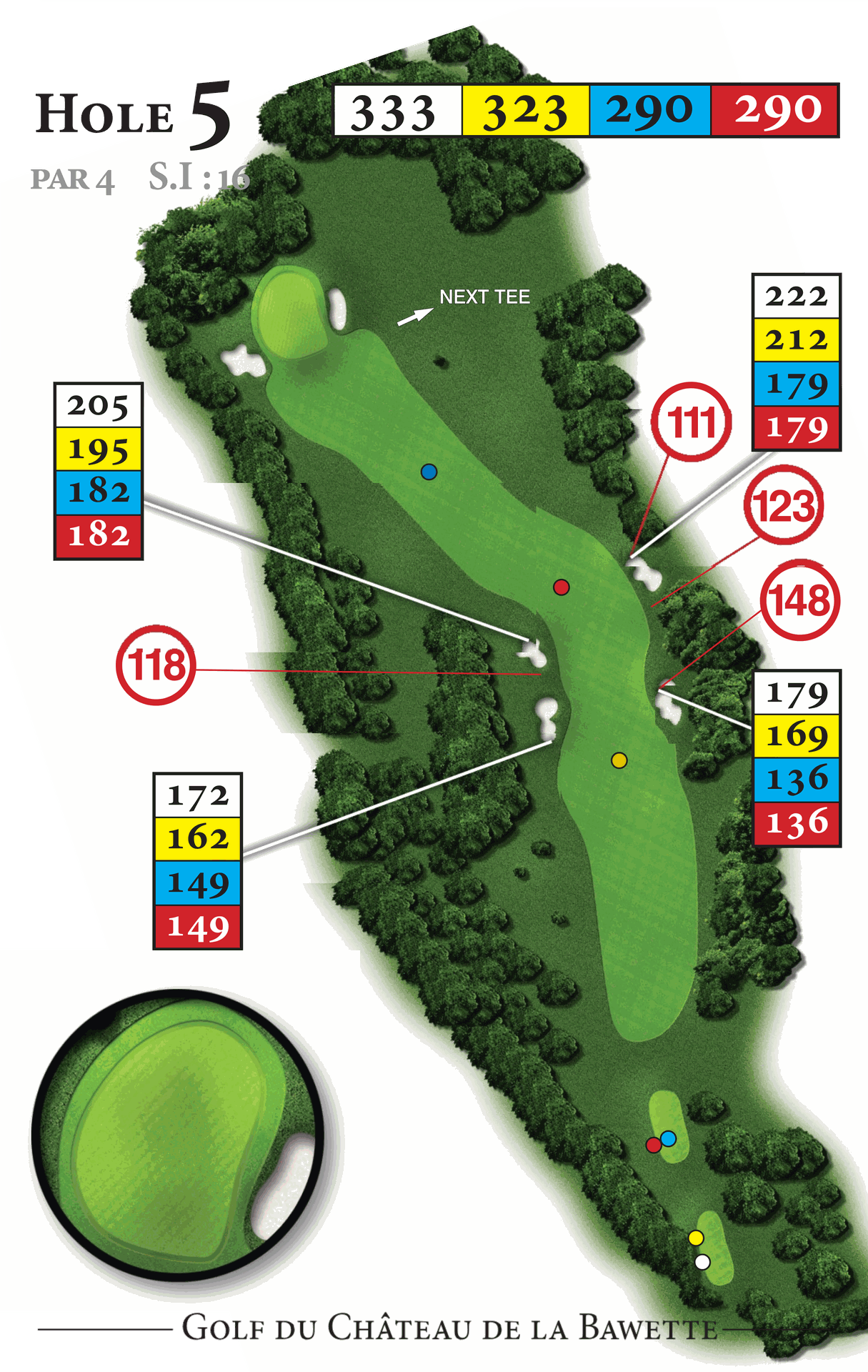
Hole 5
Tips
Tee shot: 2 consecutive bunkers on the left and one on the right.
Approach: uphill green, do not go past it (woods). Bunkers on either side of the green.
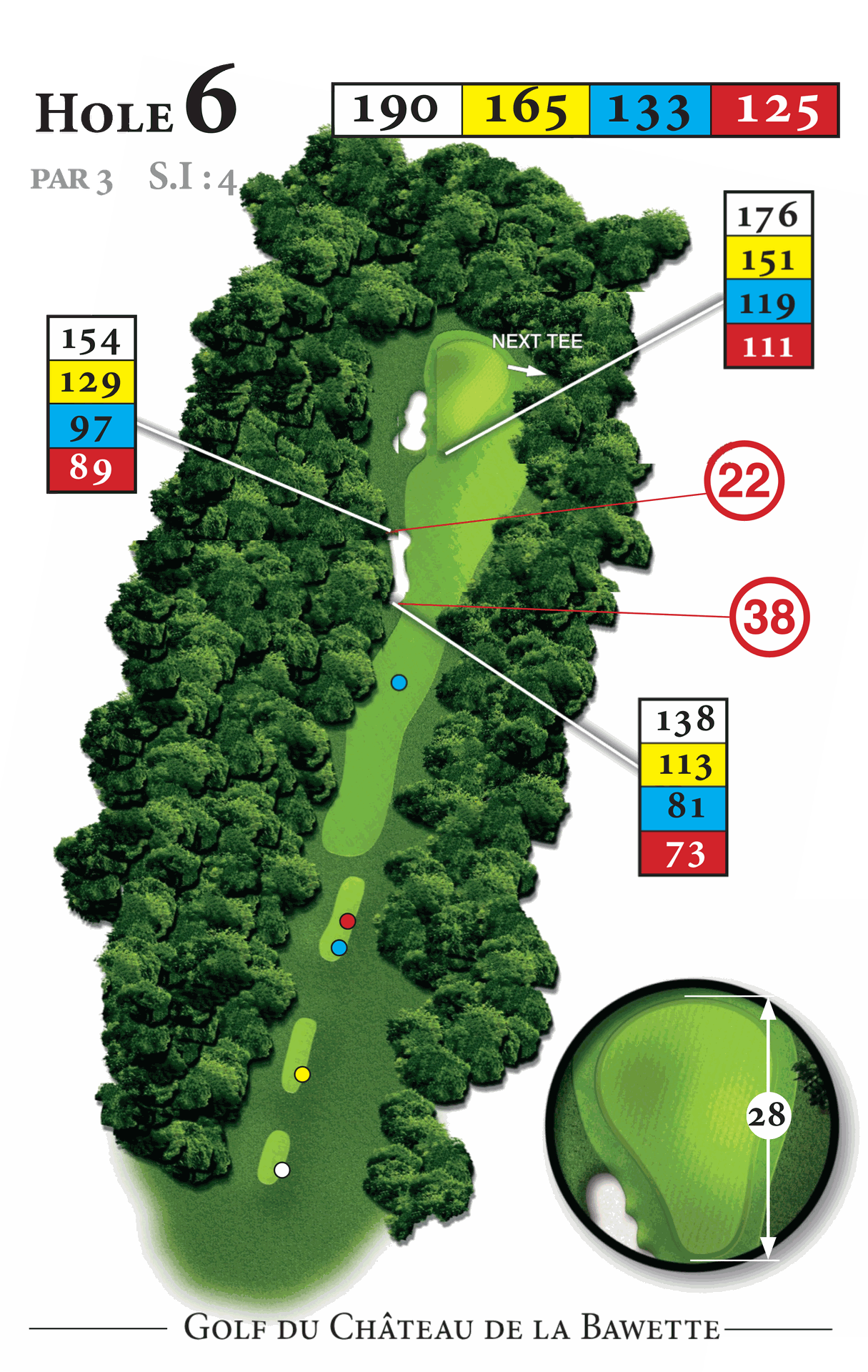
Hole 6
Tips
Tee shot: play it straight (woods on either side). The slope to the right of the green can bounce the ball back onto it.
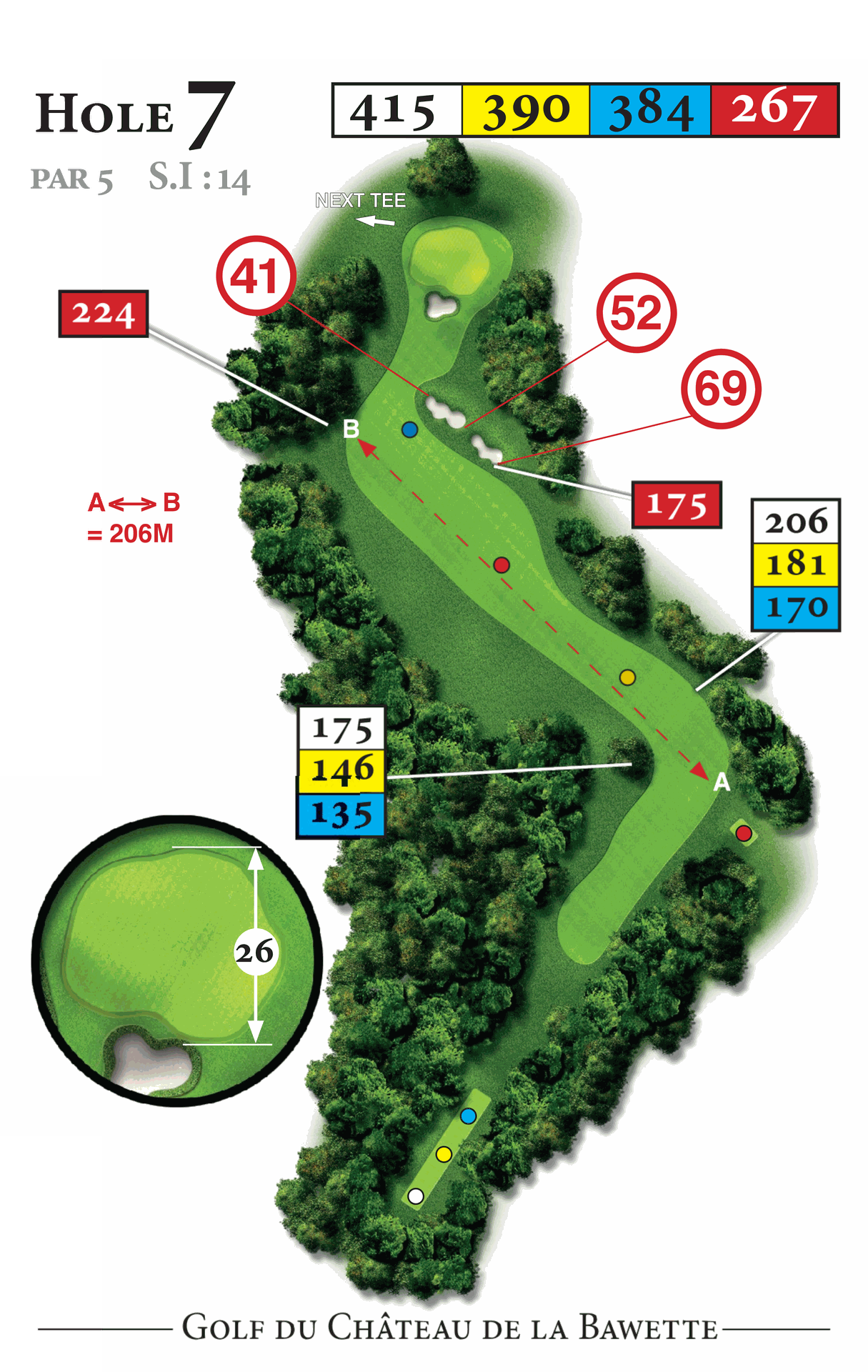
Hole 7
Tips
Tee shot: carefully judge the distance to the 1st dogleg. Play it straight (woods). 2nd shot: to the left of the 2 bunkers.
Approach: barely visible bunker just in front of the green.
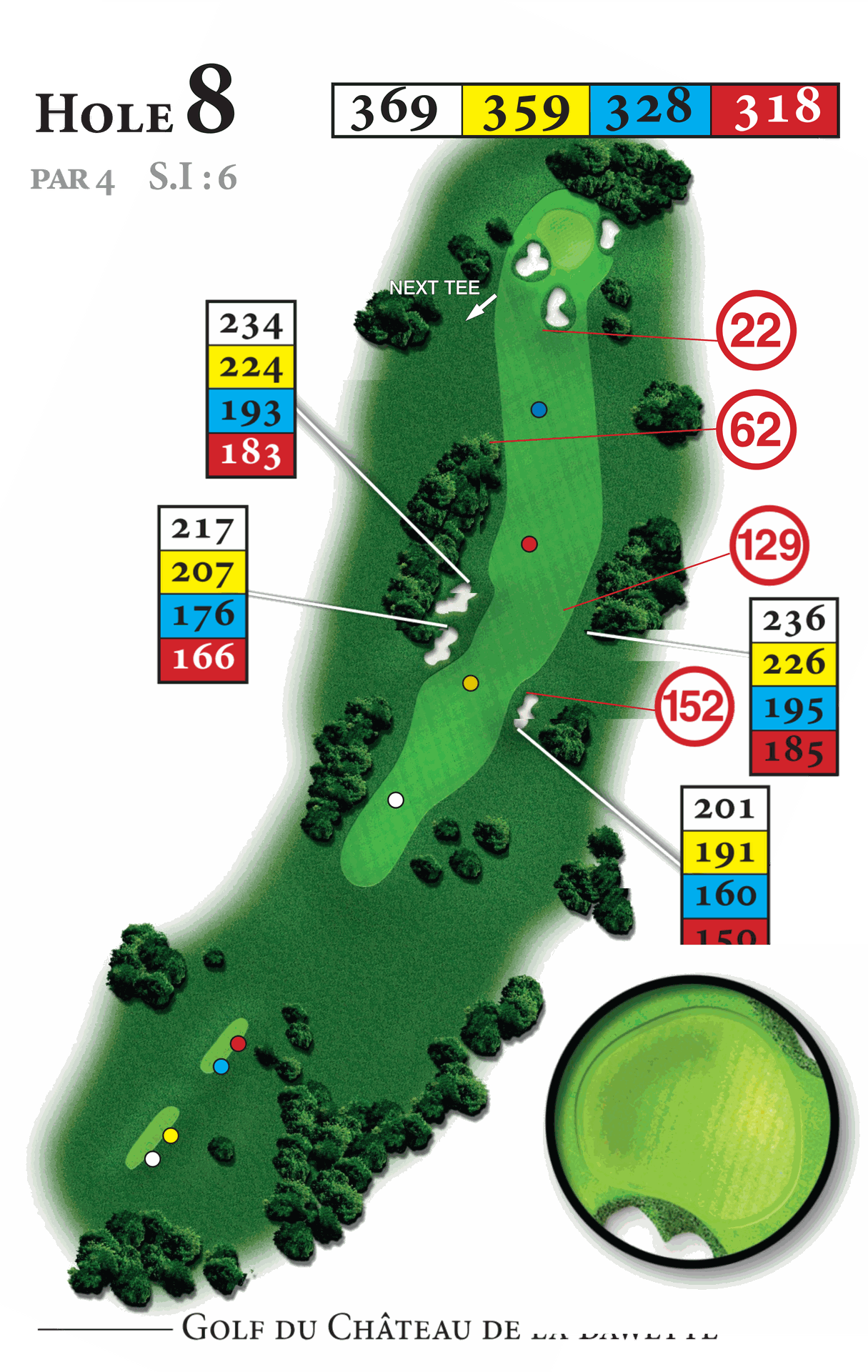
Hole 8
Tips
Slight dogleg left.
Tee shot: aim for the right side of the fairway (towards the bunker).
Approach: the green sits lower! Bunker 10 m in front of the green (left and right).
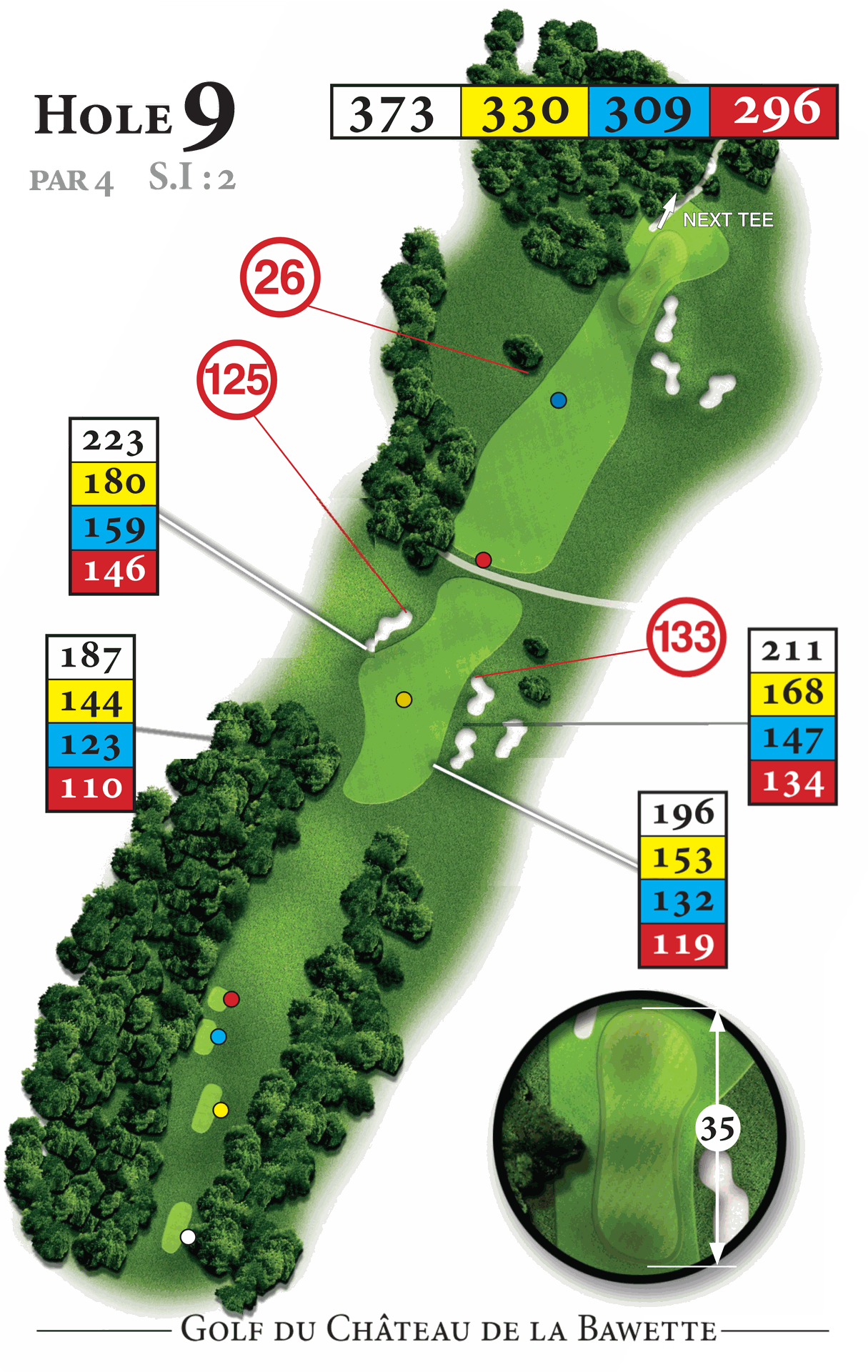
Hole 9
Tips
Tee shot: play it straight (woods on both sides).
Approach: not to the left (thick rough then woods) — aim for the green or slightly to the right (2 bunkers). Two-tier green.
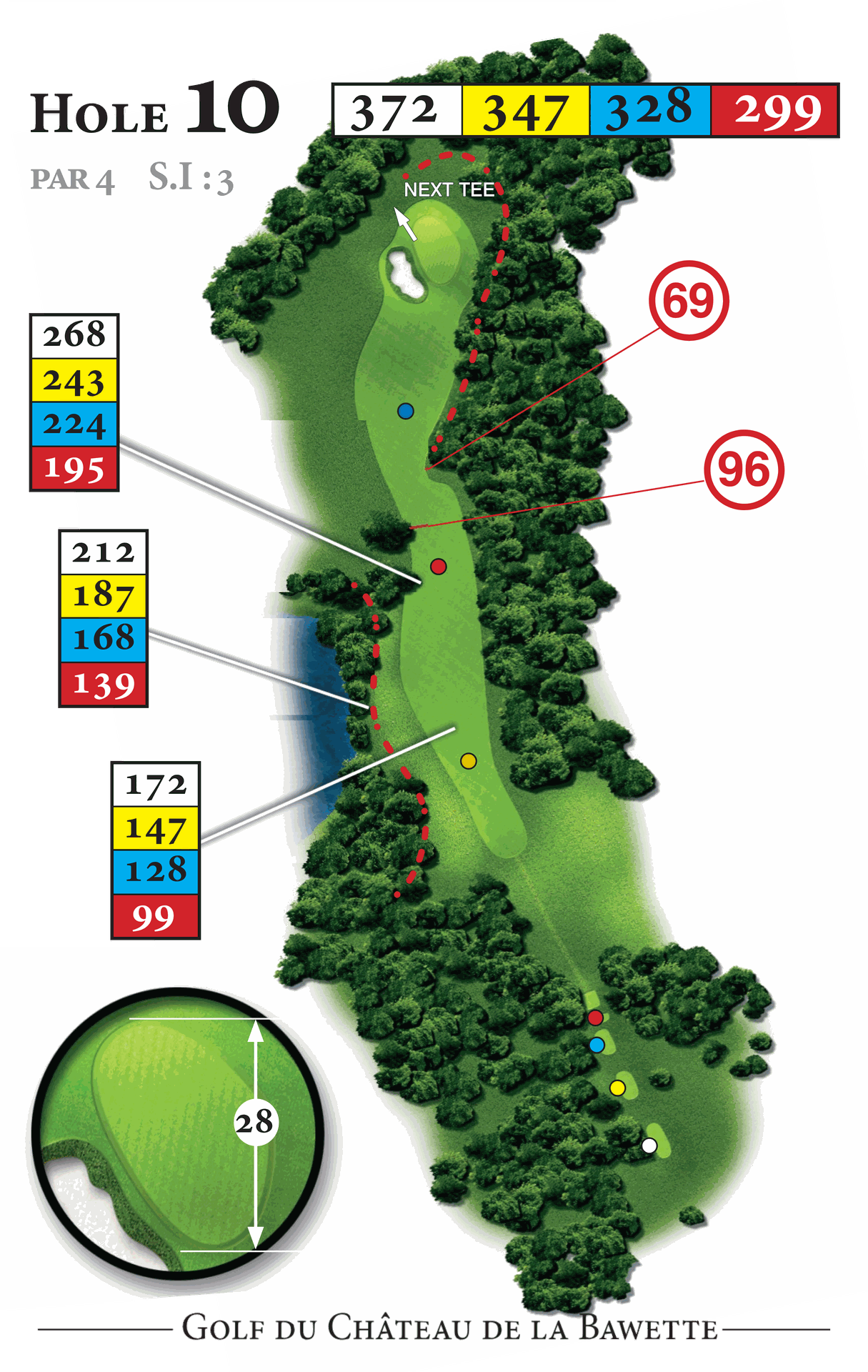
Hole 10
Tips
3 bunkers, one of which is just visible about 15 metres to the left in front of the green.
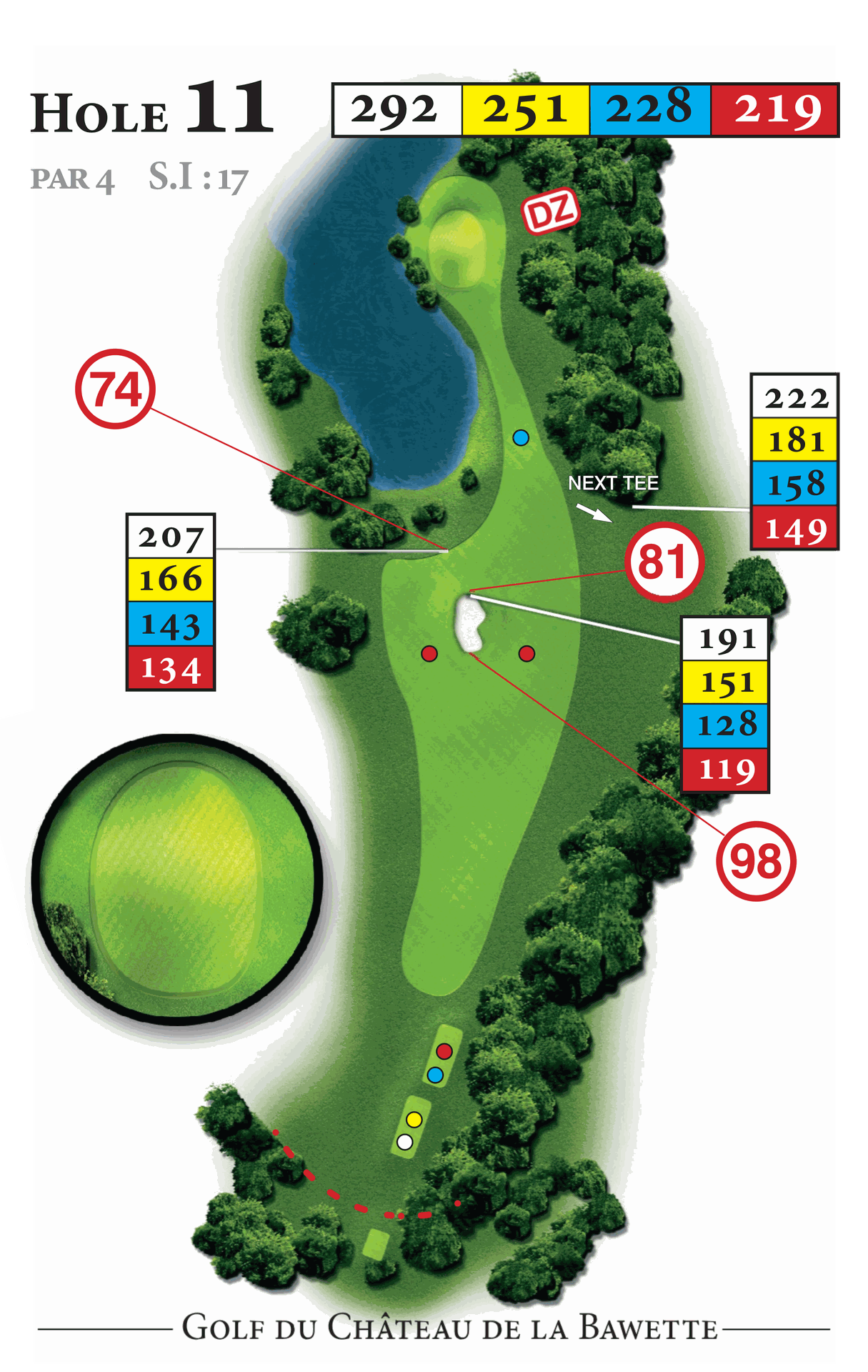
Hole 11
Tips
Tee shot: 2 consecutive bunkers on the left and one on the right.
Approach: uphill green, do not go past it (woods). Bunkers on either side of the green.
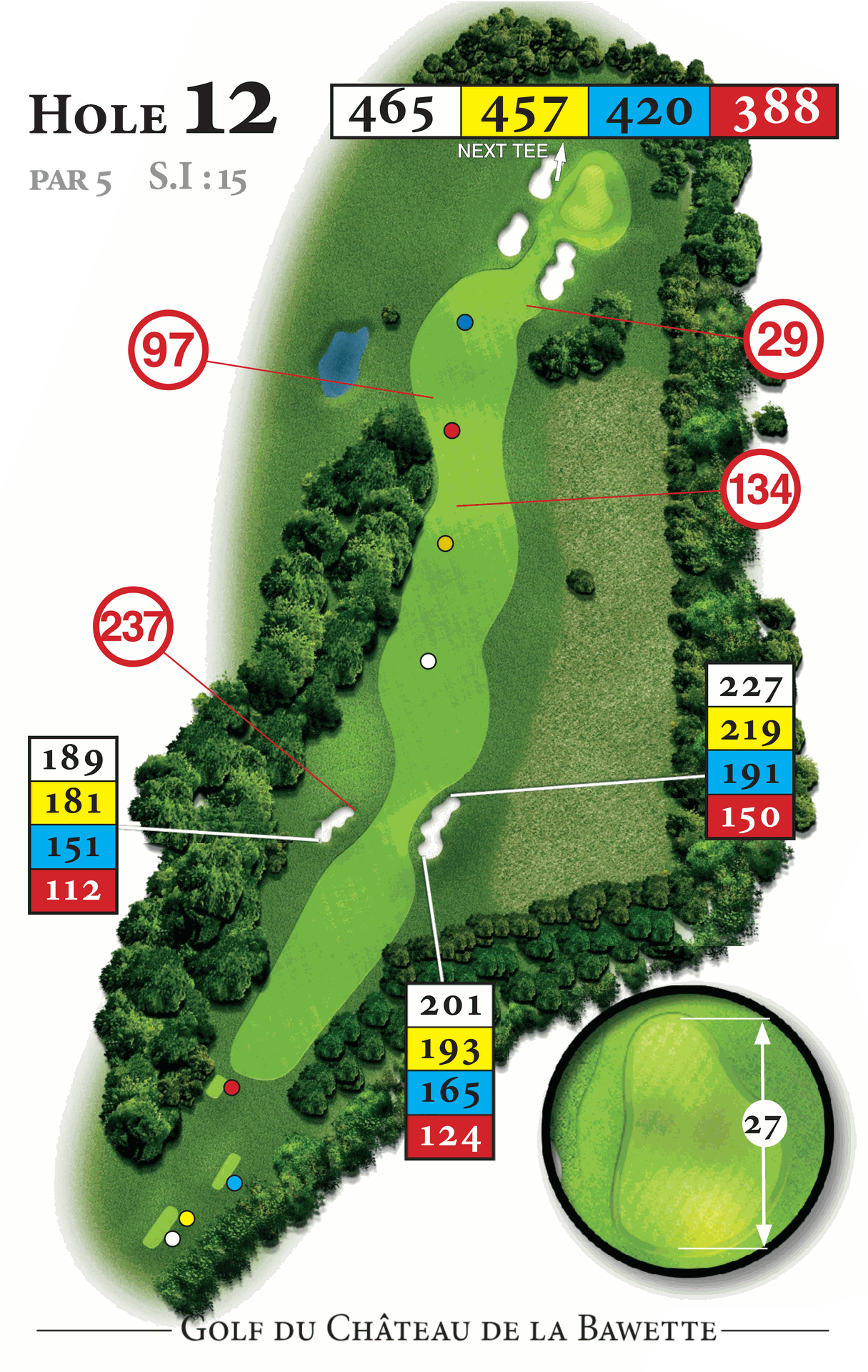
Hole 12
Tips
Tee shot: play it straight (woods on either side). The slope to the right of the green can bounce the ball back onto it.
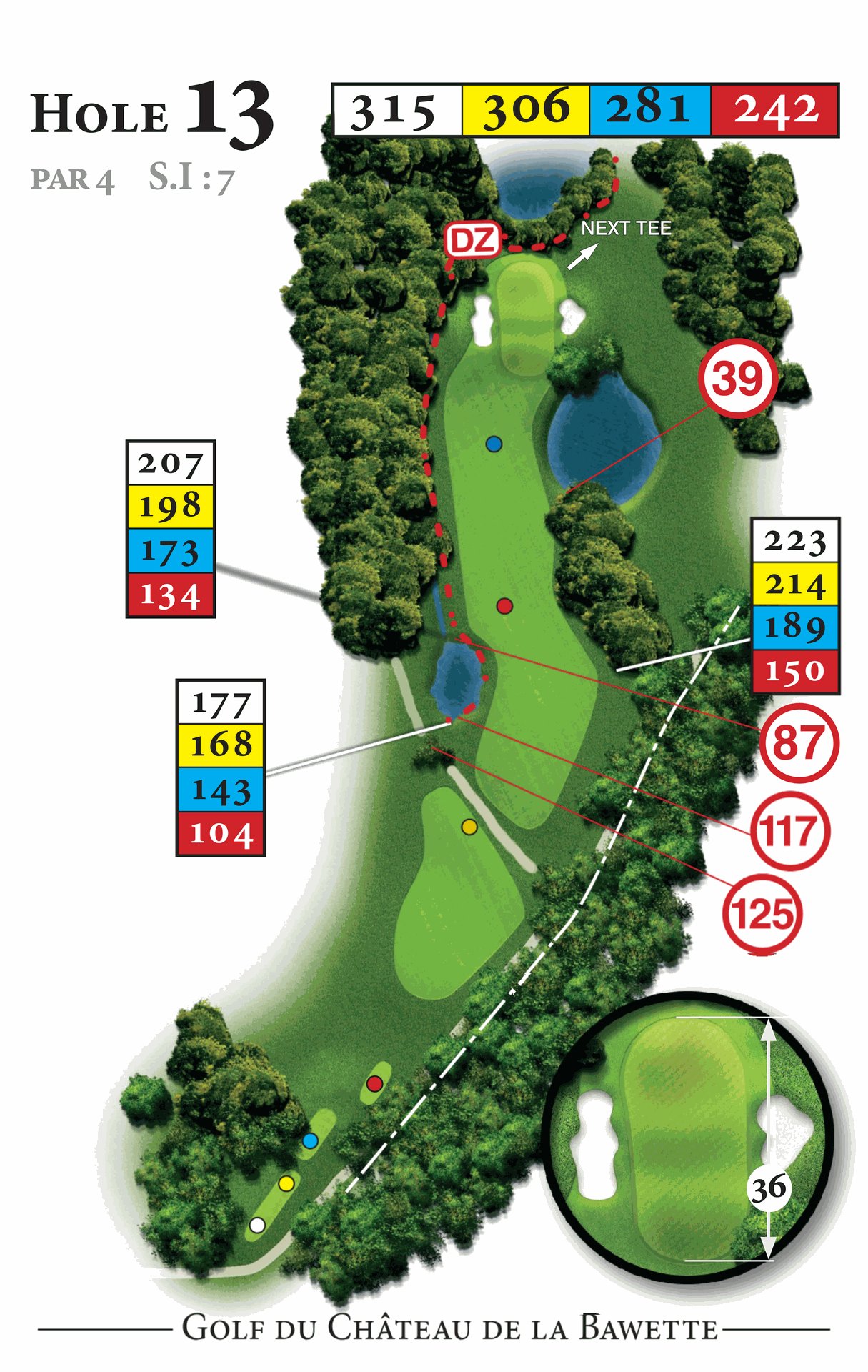
Hole 13
Tips
Tee shot: out of bounds on the right (path) and pond on the left (red stakes).
Approach: pond on the right extending towards the fairway (barely visible). Uphill green.
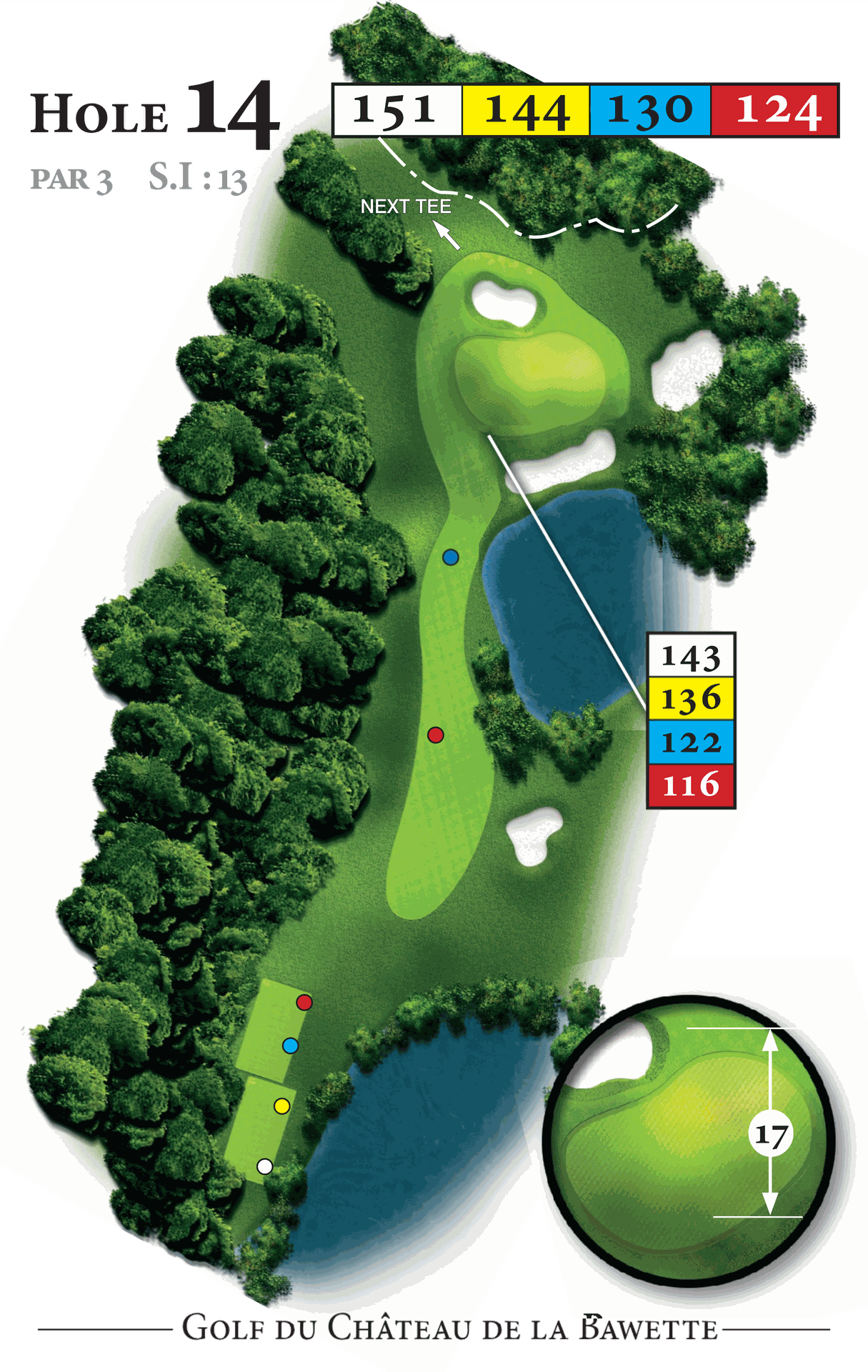
Hole 14
Tips
Approach: woods on the left and pond on the right (+ out of bounds behind the green).
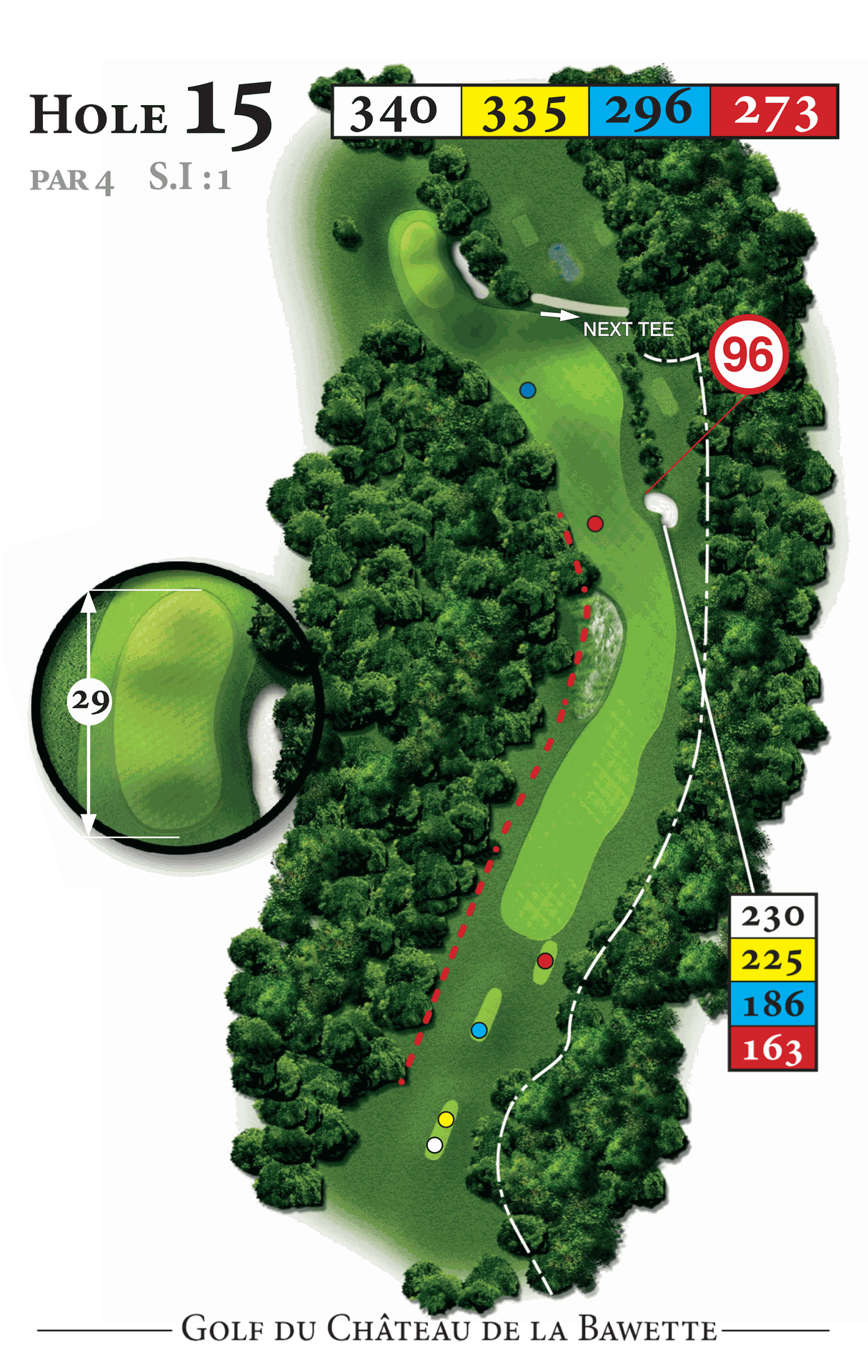
Hole 15
Tips
Tee shot: straight and long — water on the left, out of bounds on the right (path).
Approach: elevated, two-tier green. Make sure to carry the distance.
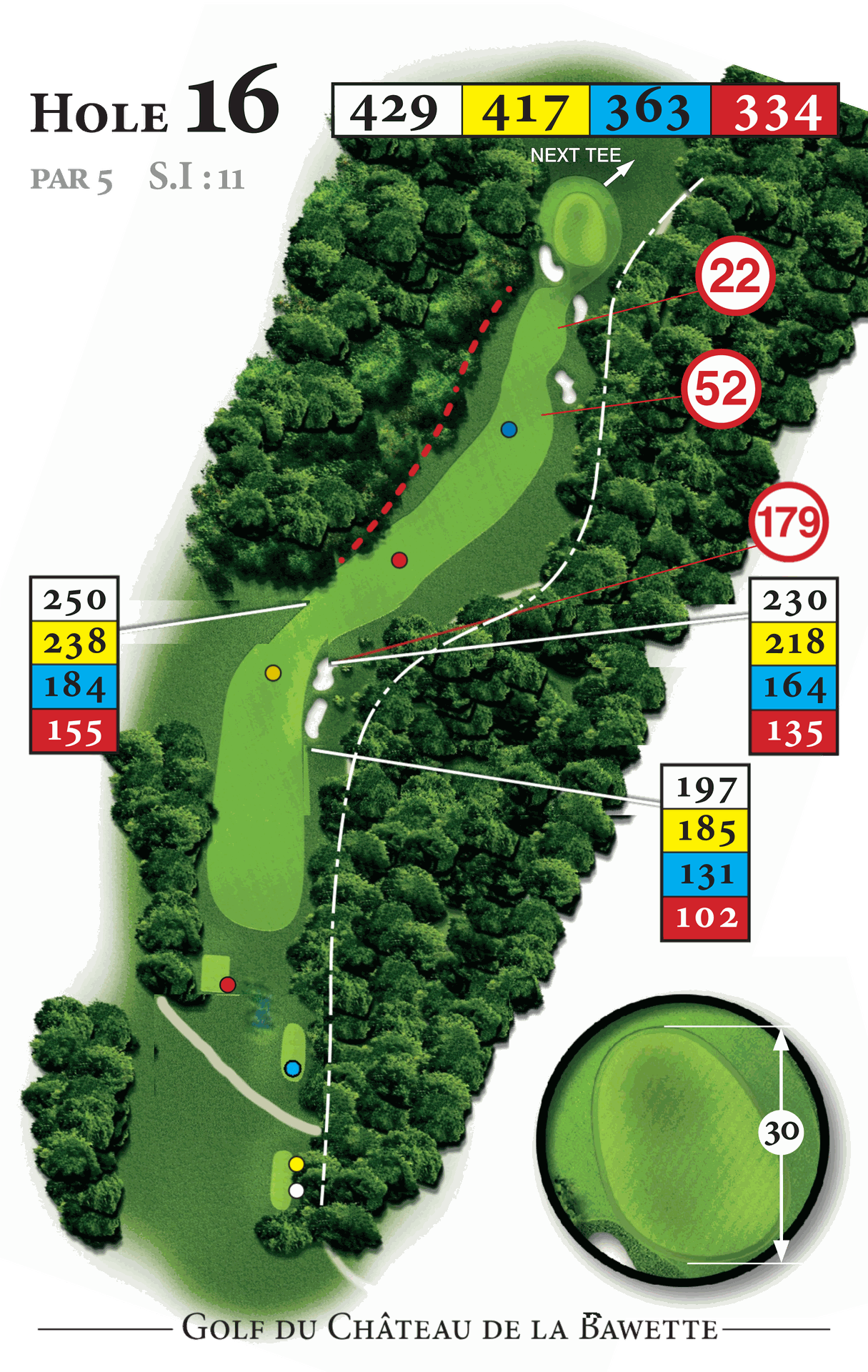
Hole 16
Tips
Tee shot: aim for the left side of the fairway. Out of bounds on the right. 2nd shot: aim for the bunker on the right side of the fairway.
Approach: slightly elevated green; bunker at the front left.
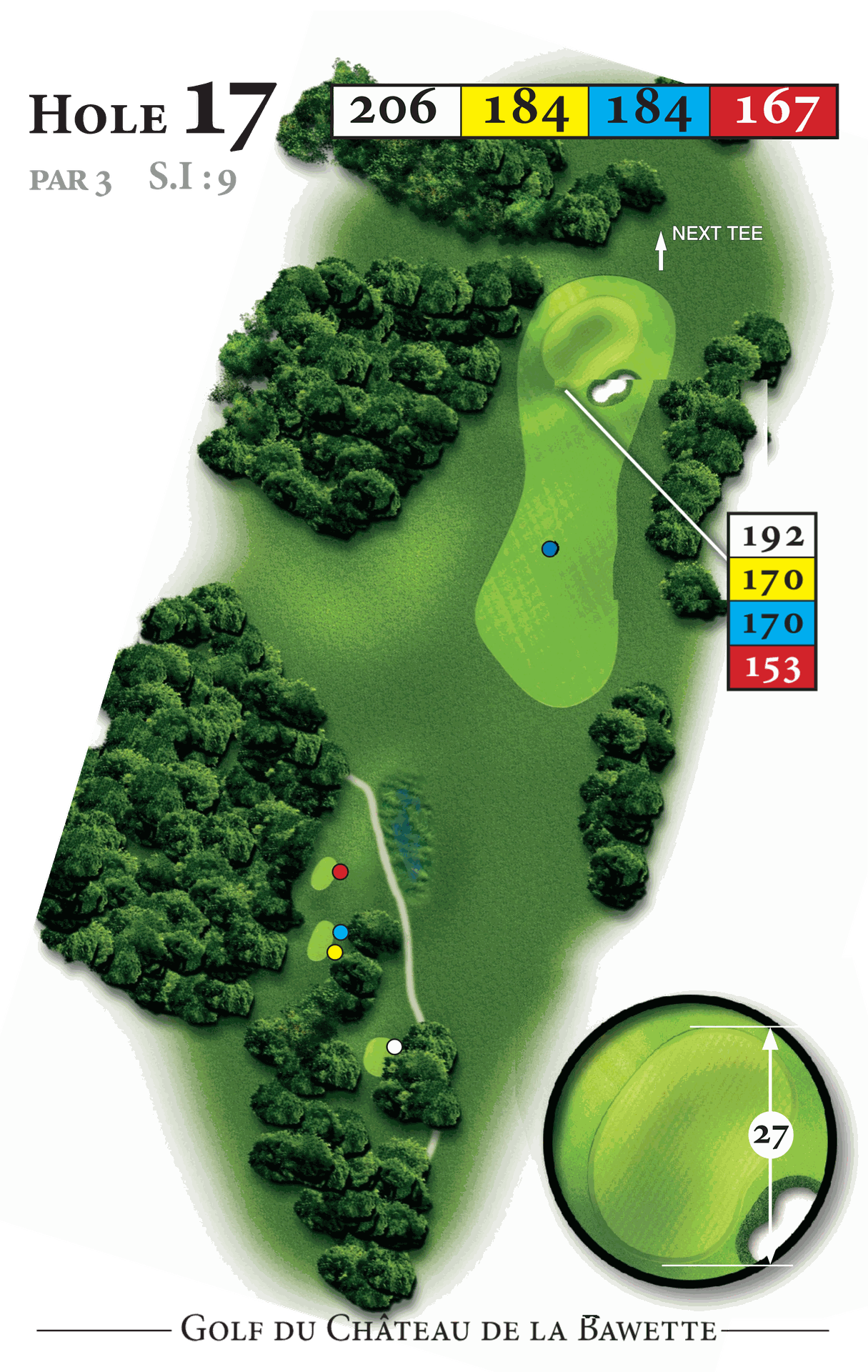
Hole 17
Tips
Approach: fairly long Par 3 — slightly elevated green — bunker at the front right.
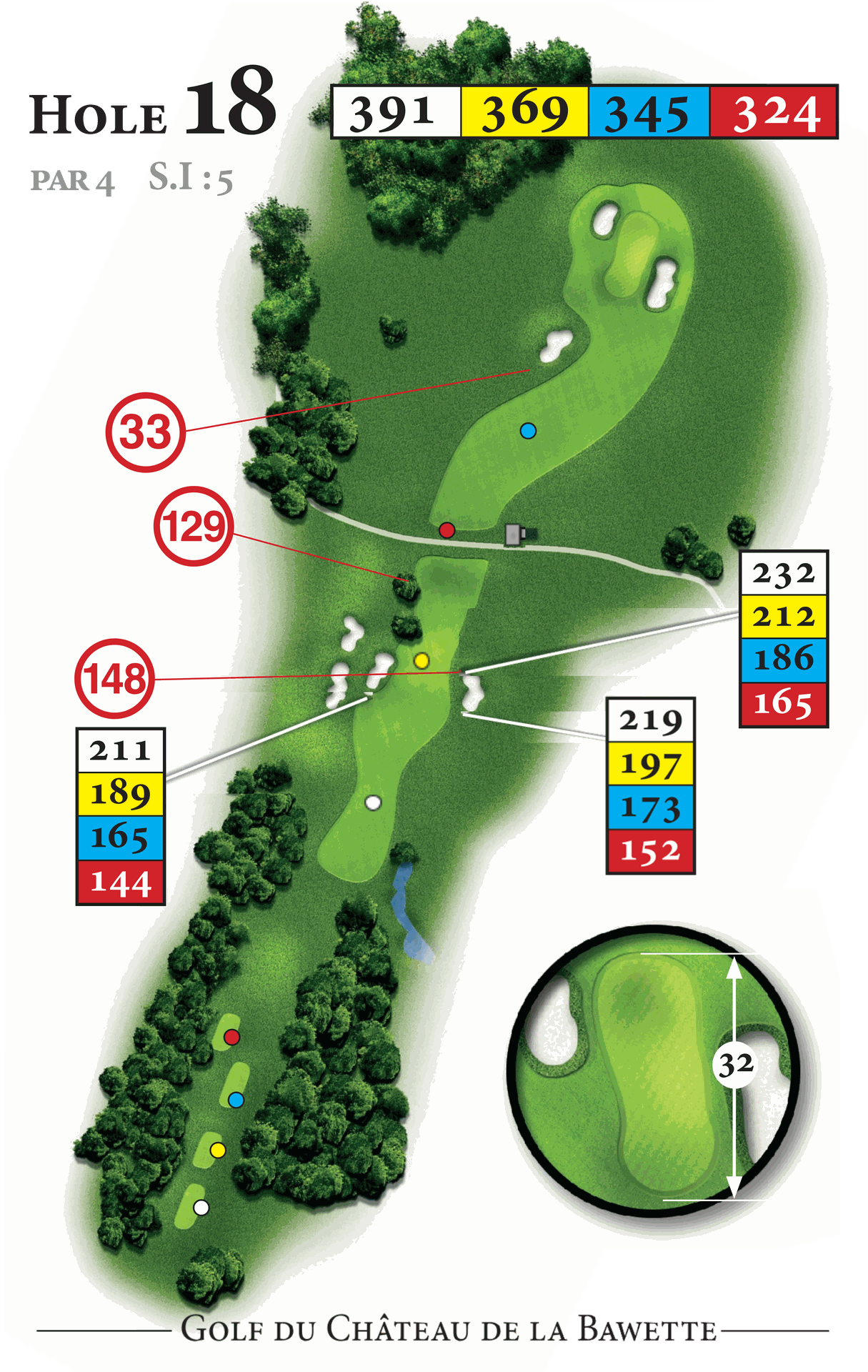
Hole 18
Tips
Tee shot: play it straight — bunkers on the right and left — no out of bounds.
Approach: watch out for the ‘military’ bunker (it kicks the ball back strongly). Bunker at ±25 m in front of the green, on the left. Bunkers at the front right and back left of the green.
Practice Areas
Perfect your game before you tee off — a practice range, putting green and chipping green are available to you.

Practice Range
Several hitting bays with targets at various distances.

Putting Green
A large putting green to work on your touch around the hole.

Chipping Green
Practice your short game with sand and rough close by.
Golf and the Environment
Golf du Château de la Bawette spans nearly 70 hectares of varied landscape, where fauna and flora coexist naturally with the game. Here, respect for the environment is not just talk: our course is maintained without any pesticides, a demanding commitment that requires in-depth technical expertise and reflects our conviction that golf and nature must move forward together.
To manage our estate in a sustainable and responsible way, our priorities are built around several key areas:
- Rigorous water management
- Soil preservation and sustainability without chemical products
- The protection and harmonious development of local fauna and flora
- The promotion of renewable energy
To reinforce these commitments, the club relies on external expertise and specialized partners, whose recommendations continuously guide our maintenance practices.
An exceptional natural setting, carefully preserved for present and future generations.